
| |
|
|
A
Revolutionary Coating for Medical Devices
|
| |
MEDCOAT
2000™ - Overview
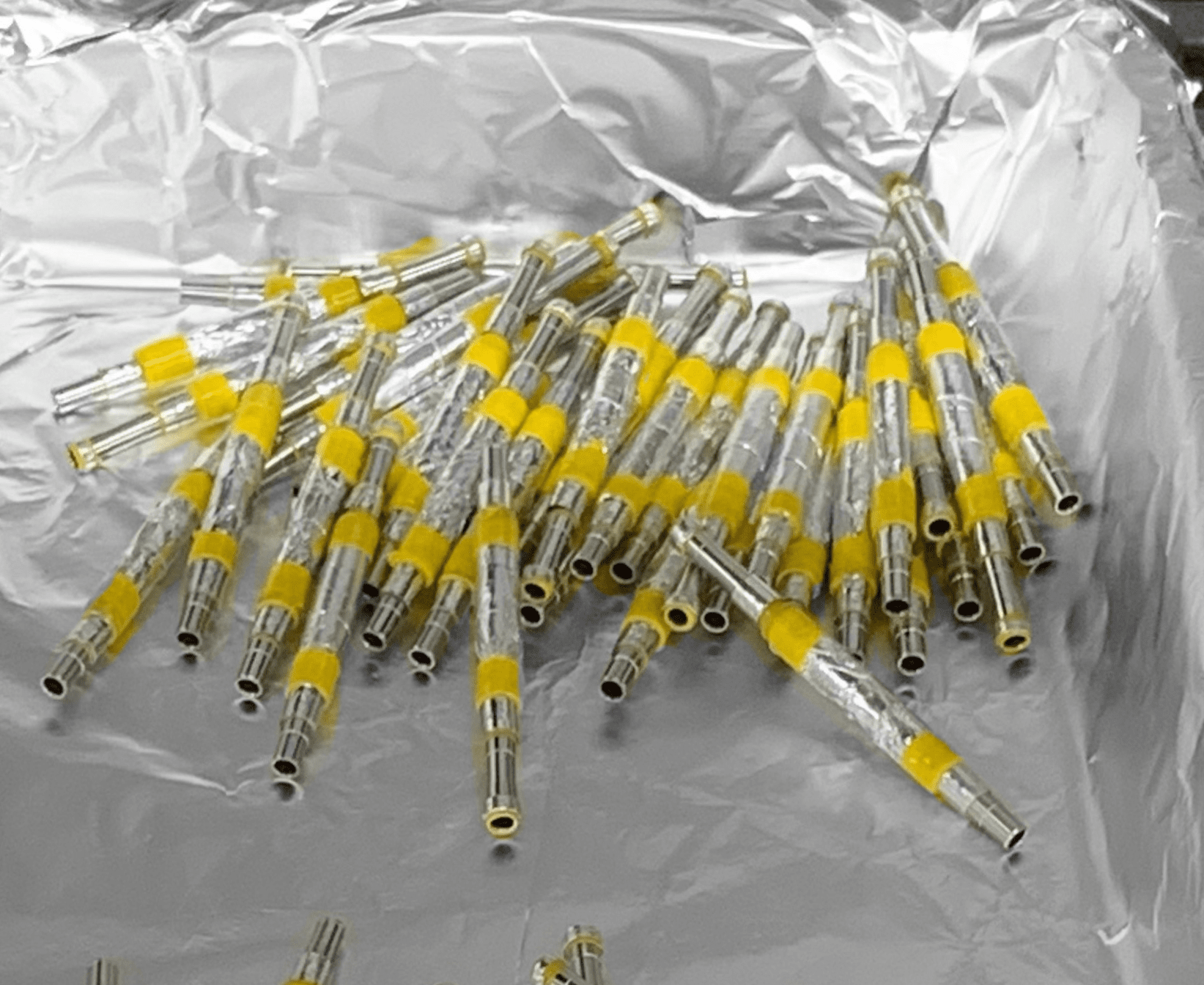
|
|
|
MEDCOAT 2000™ was
developed by The Electrolizing Corporation of Ohio specifically
to meet the needs of the
medical device industry. This process has been tested by the North American
Science Associates (NAMSA), and shown to greatly improve the performance
and service life of medical devices.
MEDCOAT 2000™ can
be successfully applied to most ferrous and some nonferrous
metals such as copper and aluminum.
MEDCOAT 2000™,
an electroplate process, increases wear resistance, reduces friction,
prevents galling and seizing and minimizes corrosion. Unless
otherwise specified, MEDCOAT 2000™ is applied directly to the base metal without an intermediate coating. It is
applied following completion of all base metal processing, which
includes a proprietary surface preparation procedure as part
of the MEDCOAT 2000™ process.
|
|
|
| |
|
|
|
The Unique Chemistry of MEDCOAT 2000™ Makes
it the Perfect Finish
- Positive
ion bond to metal creates excellent adhesion - no
chipping, flaking or peeling.
- Density
of MEDCOAT 2000™ makes it more lubricious.
- Reduces
friction: does not rub away or generate heat.
- Reduces
galling and seizing.
- Cleaning
instruments is quick and easy.
- Non-magnetic:
will not affect any sensitive electronic operating
room equipment.
- Wear
resistance is 14 times greater than uncoated stainless
steel.
- Electrical
conductivity of MEDCOAT 2000™ is greater than that of stainless steel.
- Hardness
of Rc 72-74: near ceramic hardness.
- Provides
a barrier to nickel exposure
|
|
|
|
|
|
USP
Class VI Certified
|
-
Acute
System Toxicity - No systemic toxicity
-
Intracutaneous
Toxicity - No localized tissue reaction
-
Implant
Toxicity - No irritation to human tissue
|
ISO/Tripartite
Tested
|
-
Hemolytic
- non-hemolytic
-
Mutagenicity
- not mutagenic
-
Pyrogenicty
- non-pyrogenic
-
Cytotoxicity
- non-toxic to living cells
-
Toxicity
- non-toxic
-
Sensitization
- non-sensitizing
Testing to the
subchronic level has already been completed. MEDCOAT 2000™ is an extensively GLP tested USP class approved coating that exceeds Tripartite
Guidelines and meets many ISP 9000 biocompatibility standards
pertaining to subchronic use classifications. MEDCOAT 2000™ meets biocompatibility medical standard for ISO 10993.
|
| |
|
|
Proven
Applications of MEDCOAT 2000™
|
|
|
-
All types
of surgical and dental instruments
-
-
Bone
saw guides & blades
-
Bone screw
taps
-
Broaches & acetabular
reamers
-
Cannulas
-
Endoscopic
and laprascopic instruments
-
Oscillating
orthopedic saw blades
-
Single-pieces
curettes, elevators, chisels
-
Tibial stylus
assemblies
-
Bone drills
-
Reamers
-
Dental drills
-
Aluminum
handles
|
|
|
MEDCOAT
2000™ - Application
|
|
|
|
|
|
|
MEDCOAT
2000™ can
be applied with great precision and consistency. Each part
drawing should specify the coating thickness dimension and
tolerance. Consult one of our sales engineers to establish
the proper coating thickness and tolerance. The practical coating
range for MEDCOAT 2000™ is 0.00005" to 0.0006" (1.2µ to 15.38µ). Depending upon the thickness specified and the part's quality requirements,
the following thickness tolerance can typically be maintained: ±.0001". Coating thickness is measured and can be certified, using fluorescence X-Ray
technology. For thicker applications and special conditions,
please consult one of our sales engineers.
|
| |
|
|
|
|
|
|
MEDCOAT
2000™'s
maximum operating temperature during processing will not exceed
400°F. MEDCOAT 2000™ can withstand approximately 1600° F (710° C). Oxidation begins at approximately 1100° F (430° C). Diffusion occurs at 1650° F (740° C). Time-at-temperature parameters should be reviewed with The Electrolizing
Corporation of Ohio technical staff prior to specifying or
testing MEDCOAT 2000™.
|
| |
|
|
- Abrasion
and Wear Resistance
|
|
|
Taber
Abrasion Wear Resistance testing was conducted on MEDCOAT 2000™. Two types of stainless steel were used in these tests: AMS 5511 (low C, 18%
Cr, 8% Ni steel: Sheet; AMS for SAE 30304) and AMS 5504 (.15%
C, 12.5% Cr steel; Sheet; AMS for SAE 51410). One of each material
type was coated with MEDCOAT 2000™ one was coated with conventional hard chrome, the other was uncoated. Testing
was performed in compliance with Specification FED-STD-141,
Method 6192.1. CS-10 Calibrase Wheels were used. One thousand
grams of pressure was used against the test panels. The panels
were cleaned with acetone prior to weighing. Results of the
testing show a great improvement in wear resistance of the
MEDCOAT 2000™ specimens versus the conventional hard-chrome plated specimen and the uncoated
specimen.
|
|
| |
|
|
|
|
|
|
Application
of MEDCOAT 2000™ results
in a smooth, fine-grained deposit that is uniform in thickness
and appearance. The surface is free of blisters, pits, nodules
and porosity. There is minimal edge buildup. It can be applied
in a dull non-reflective finish, satin or bright finish.
Samples of MEDCOAT 2000™ show
no evidence of discoloration, cracking, flaking, rust or other change
following repeated autoclave exposures. Two samples, placed in a
heat-resistant dish, were subjected to over 1000 autoclave cycles.
Steam exposure was conducted in production type gravity displacement
steam sterilization vessels at 250° F (121° C). After every fifth cycle, visual and microscopic inspections were made for
discoloration and degradation of the samples. Tests were discontinued
because repeated autoclave exposures had no effect of the outer surfaces
of the samples.
|
|
Ordering
Information
|
|
|
When submitting
parts for processing, clearly specify the basis metal designation,
required MEDCOAT 2000™ thickness
and tolerance, and accompanying part print that delineates coverage:
critical surfaces to be covered by MEDCOAT 2000™, areas not to be covered, and optional areas. To achieve optimum performance
and cost-effectiveness, all coating requirements should be reviewed
with the Electrolizing Corporation of Ohio prior to processing.
For maximum protection against damage and
corrosion, before and after processing, all parts must be properly
wrapped, preserved and shipped in suitable containers. Parts
need to be free of scale, rust and corrosion prior to processing.
The Electrolizing Corporation of Ohio will remove oil, grease
and other preservative materials. We can provide custom packaging
to customer specification, so that the product is shipped ready
for sterilization and use. Click here to request a quotation.
|